
Introduction
What is content marketing?
Content marketing is a strategic approach to creating and sharing valuable, relevant, and consistent content to attract and engage a specific audience. Instead of directly promoting a product or service, content marketing focuses on providing useful information that builds trust and long-term relationships with potential customers.
It includes formats such as blog posts, videos, social media content, emails, podcasts, and infographics designed to educate, inform, or entertain
Why content marketing is important in digital marketing
Content marketing is a core part of digital marketing because it helps businesses connect with their audience in a meaningful way. Rather than relying only on ads, it uses helpful and engaging content to attract users organically.
It is important because it:
- Improves online visibility and reach
- Builds trust and credibility with audiences
- Supports SEO and organic traffic growth
- Enhances customer engagement and retention
- Strengthens overall marketing performance
Without content marketing, digital marketing strategies often lack long-term sustainability.
How content marketing helps business growth

Content marketing plays a direct role in business growth by guiding potential customers through the buying journey. It helps attract new audiences, nurture leads, and convert them into paying customers.
It contributes to growth by:
- Increasing brand awareness
- Driving consistent website traffic
- Generating qualified leads
- Improving conversion rates
- Building customer loyalty and repeat business
Over time, effective content marketing becomes a powerful engine for scalable and sustainable business success.
Overview of the guide
This guide will explain the complete process of content marketing and how to use it effectively for business growth. It will cover:
- Fundamentals of content marketing
- Understanding target audience and goals
- Content creation strategies
- SEO and keyword research
- Content planning and distribution
- Measuring performance and results
- Tips for long-term success
By the end, you will understand how to build a strong content marketing strategy that attracts, engages, and converts your audience effectively.
What Is Content Marketing?
Definition of content marketing
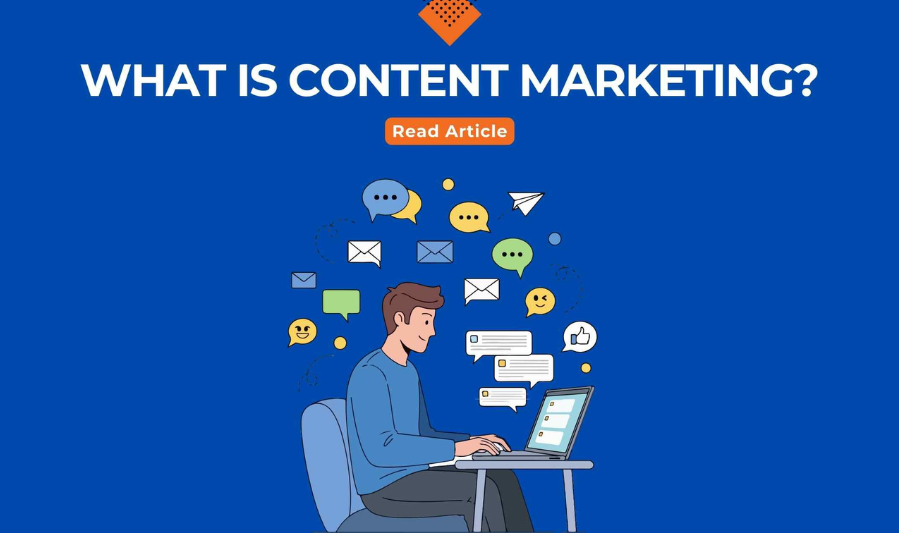
Content marketing is a strategic marketing approach focused on creating, publishing, and distributing valuable, relevant, and consistent content to attract and retain a clearly defined audience. Instead of directly promoting a product or service, it focuses on providing useful information that builds trust and encourages long-term customer relationships.
The ultimate goal is to drive profitable customer actions through value-driven content rather than direct advertising.
Difference between content marketing and traditional marketing
Traditional marketing:
- Focuses on direct promotion and selling
- Uses ads like TV commercials, billboards, radio, and print
- Interrupts the audience to deliver messages
- Often short-term focused on immediate sales
- One-way communication
Content marketing:
- Focuses on providing value before selling
- Uses blogs, videos, social media, emails, and guides
- Attracts audiences organically through helpful content
- Builds long-term relationships and trust
- Two-way communication with engagement and interaction
In simple terms, traditional marketing “pushes” messages, while content marketing “pulls” audiences in.
Key objectives of content marketing
Content marketing is designed to achieve specific business and marketing goals, such as:
- Increasing brand awareness
- Building trust and credibility
- Driving website traffic
- Generating leads and conversions
- Educating potential customers
- Improving customer retention and loyalty
These objectives focus on long-term growth rather than quick, short-term results.
Types of content used in marketing
Content marketing uses a variety of formats to reach and engage different audience segments.
Common types include:
- Blog posts and articles
- Social media posts
- Videos and reels
- Infographics and visual content
- Email newsletters
- E-books and whitepapers
- Podcasts and audio content
- Case studies and testimonials
- Webinars and live sessions
Using multiple content types helps businesses reach audiences across different platforms and stages of the customer journey.
Importance of Content Marketing
Builds brand awareness
Content marketing helps introduce your brand to a wider audience by consistently sharing valuable and relevant information. When people frequently see useful content from your brand, they become more familiar with it over time.
This repeated exposure increases visibility across search engines and social media platforms, making your brand easier to recognize and remember.
Increases customer trust and credibility
Trust is a key factor in customer decision-making, and content marketing helps build it naturally. When you provide helpful, honest, and informative content, your audience starts to see your brand as reliable and knowledgeable.
This credibility grows when you:
- Answer audience questions clearly
- Share expert insights and advice
- Provide real examples or case studies
Over time, this trust influences purchasing decisions and customer loyalty.
Improves SEO and organic traffic
Content marketing plays a major role in search engine optimization (SEO). High-quality, keyword-optimized content helps your website rank higher on search engines like Google, making it easier for users to find you.
It improves SEO by:
- Targeting relevant search keywords
- Creating more indexed pages
- Increasing internal linking opportunities
- Answering user search intent effectively
As a result, your website receives more consistent and long-term organic traffic.
Generates leads and sales
Content marketing helps guide potential customers through the buying journey. Informative and persuasive content attracts users, educates them, and encourages them to take action.
Examples include:
- Landing pages with strong calls-to-action
- Product guides and comparisons
- Case studies and testimonials
- Lead magnets like ebooks or free resources
This process helps convert visitors into leads and eventually into paying customers.
Strengthens long-term customer relationships
Content marketing is not just about attracting new customers—it also helps retain existing ones. By continuously providing valuable content, you stay connected with your audience even after a purchase.
This leads to:
- Higher customer loyalty
- Repeat purchases
- Better brand engagement
- Stronger emotional connection with your audience
Understand Your Target Audience
Audience demographics
Audience demographics refer to the basic characteristics of your target audience that help you understand who they are. This information allows you to tailor your content to the right group of people.
Common demographic factors include:
- Age
- Gender
- Location
- Education level
- Occupation or industry
- Income level
Knowing these details helps you create content that matches your audience’s language, tone, and preferences.
Interests and online behavior
Understanding audience interests and online behavior helps you create content that people actually want to consume and engage with.
Key aspects include:
- Topics they frequently search for
- Social media platforms they use most
- Types of content they prefer (videos, blogs, reels, etc.)
- Time they are most active online
- Influencers, pages, or brands they follow
Studying behavior patterns allows you to publish content that feels relevant, timely, and engaging.
Pain points and needs
Pain points are the problems, challenges, or frustrations your audience faces, while needs are the solutions they are actively looking for. Identifying both is essential for creating effective content marketing strategies.
Examples of pain points:
- Lack of knowledge or guidance
- Difficulty achieving specific goals
- Limited time or resources
- Confusion when choosing products or services
When your content directly addresses these issues, it becomes more valuable, trustworthy, and impactful.
Creating audience personas
An audience persona is a detailed, semi-fictional representation of your ideal customer or follower. It combines demographics, interests, behaviors, and pain points into a clear profile.
A strong persona may include:
- Name and background
- Goals and motivations
- Challenges and pain points
- Preferred platforms and content formats
- Buying behavior and decision-making style
Creating audience personas helps you produce more focused, personalized, and effective content that connects with the right people.
Set Clear Content Marketing Goals
Brand awareness goals
Brand awareness goals focus on making your brand more visible and recognizable to a wider audience. The aim is to ensure that more people know who you are, what you offer, and what makes your brand unique.
Common brand awareness goals include:
- Increasing reach and impressions
- Growing social media visibility
- Expanding audience recognition
- Building a strong brand presence across platforms
Content for these goals is usually informative, entertaining, or shareable to attract new audiences.
Traffic generation goals
Traffic generation goals focus on driving visitors to your website, blog, or landing pages. The purpose is to increase the number of users who engage with your content outside of social media platforms.
Typical traffic goals include:
- Increasing website visits from social media
- Driving clicks to blog posts or articles
- Promoting landing pages or resources
- Improving referral traffic from content channels
To achieve this, content should include strong calls-to-action and valuable links.
Lead generation goals
Lead generation goals aim to convert audience members into potential customers by collecting their information, such as emails or contact details.
Common strategies include:
- Offering free resources (ebooks, guides, templates)
- Using sign-up forms or landing pages
- Running webinars or gated content campaigns
- Encouraging newsletter subscriptions
Lead-focused content should provide value while guiding users toward taking action.
Conversion and sales goals
Conversion and sales goals focus on turning leads or visitors into paying customers. This is the final stage of the content marketing funnel.
Examples include:
- Promoting products or services
- Sharing testimonials and case studies
- Creating comparison or review content
- Offering limited-time deals or discounts
- Using strong persuasive calls-to-action
Effective conversion content builds trust, highlights benefits, and encourages users to make a purchase decision.
You may also like to read these posts:
Brand Awareness Tips: How to Grow Your Brand Visibility in 2026
SEO Content Planning: A Complete Guide for Beginners
Ultimate Guide to Building a Social Media Content Plan
Create High-Quality Content
Importance of valuable content
High-quality content is the foundation of successful content marketing. It is what attracts, engages, and retains your audience over time. When your content provides real value, users are more likely to trust your brand, share your content, and return for more.
Valuable content also improves SEO performance, increases engagement, and supports long-term business growth by building authority in your niche.
Educational, informative, and entertaining content
Effective content usually falls into one or more of these categories:
Educational content:
- Teaches the audience something new
- Includes tutorials, guides, and how-to articles
- Helps solve specific problems
Informative content:
- Shares useful facts, updates, or insights
- Explains concepts clearly and simply
- Helps users make informed decisions
Entertaining content:
- Captures attention through storytelling or creativity
- Includes relatable posts, trends, or humor
- Increases engagement and shareability
A strong content strategy often combines all three to keep audiences engaged.
Writing for audience needs
Great content always focuses on the needs of the audience rather than just promoting a brand. Understanding what your audience is looking for helps you create content that feels relevant and useful.
To write for audience needs:
- Address real problems and questions
- Use simple and clear language
- Provide actionable solutions
- Focus on user intent rather than just keywords
When content directly helps the audience, it becomes more effective and impactful.
Maintaining originality and relevance
Original and relevant content stands out in a crowded digital space. Originality helps build trust and authority, while relevance ensures your content matches current trends and audience interests.
To maintain both:
- Add your own insights, experiences, or examples
- Avoid copying or repeating existing content
- Update outdated information regularly
- Align content with current industry trends
Faqs:
What is content marketing?
Content marketing is a digital marketing strategy focused on creating and sharing valuable content to attract, engage, and convert a target audience.
Why is content marketing important?
Content marketing helps build brand awareness, improve SEO rankings, increase audience trust, and generate leads and sales.
What types of content are used in content marketing?
Common content types include blog posts, videos, social media posts, infographics, email newsletters, podcasts, and case studies.
How does SEO help content marketing?
SEO helps content rank higher on search engines, making it easier for users to find your website and increasing organic traffic.
How can beginners start content marketing?
Beginners can start by understanding their audience, creating valuable content, using SEO basics, and posting consistently through a content plan.
Conclusion
Understanding the content marketing basics is essential for building a successful online presence and growing a brand in the digital world. Content marketing helps businesses connect with their audience by providing valuable, relevant, and engaging content instead of relying only on direct advertising.
By focusing on audience needs, creating high-quality content, using SEO strategies, and maintaining consistency, businesses and creators can improve visibility, build trust, and achieve long-term growth.
In the end, successful content marketing is not just about creating content—it is about delivering value, building relationships, and creating meaningful experiences that keep audiences engaged over time.